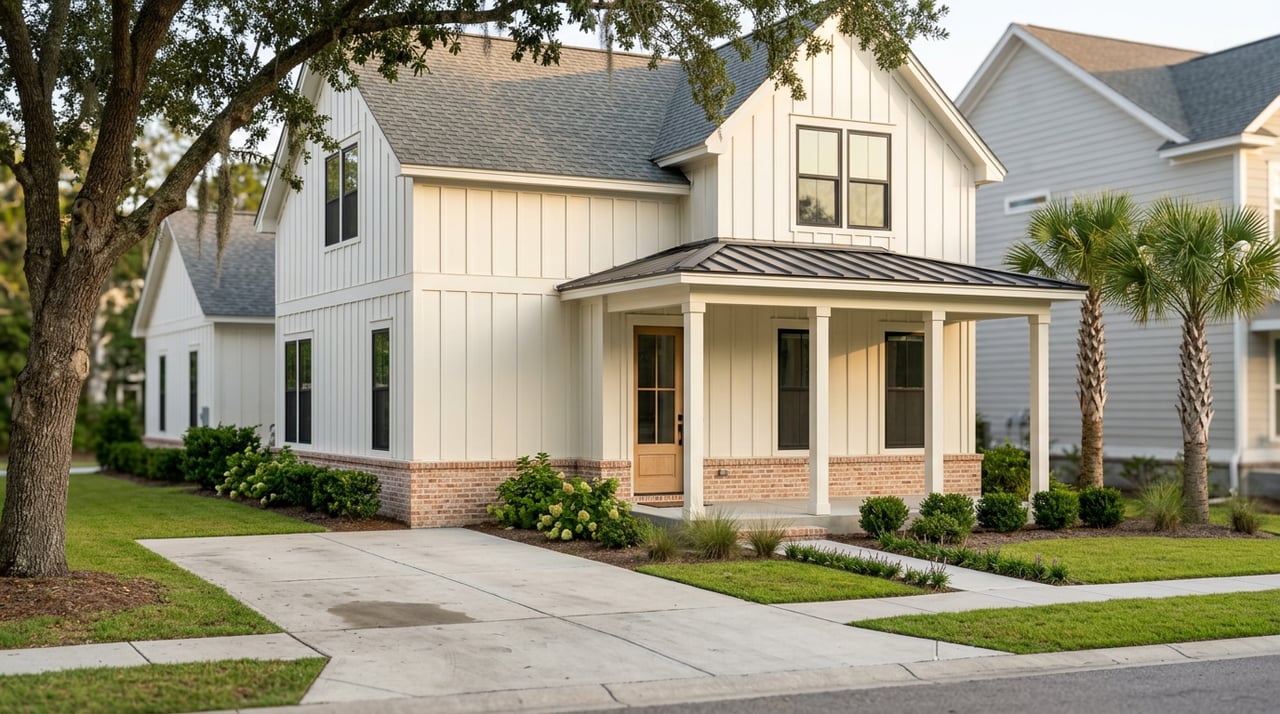
Eyeing a brand-new home in Pooler but not sure where to start? You’re not alone. With new neighborhoods opening across West Chatham and a wide range of builders, it can be hard to compare locations, amenities, and what’s actually included. In this guide, you’ll learn where growth is happening, see representative communities, understand typical features and HOA setups, and get a simple checklist to make a confident choice. Let’s dive in.
Why Pooler new construction is booming
Pooler’s growth is tied to access and jobs. You sit minutes from Savannah/Hilton Head International Airport and regional employment centers, with quick routes on I-95 and I-16. These factors continue to fuel demand and builder activity across West Chatham.
Local planning also points to Pooler’s future. The city’s comprehensive plan highlights the Pooler Parkway and Jimmy DeLoach Parkway corridors as target areas for residential and commercial development, which explains why so many new neighborhoods cluster there. You can see this focus in the city’s comprehensive plan resources and the Savannah region’s Plan 2040 growth map.
For price context, recent market trackers have reported Pooler’s median sale price in the low to mid $300,000s as of early 2026, with many new-construction single-family homes in amenity communities priced from the high $300,000s into the $400,000s. Final pricing always depends on the lot, finishes, and the community’s amenity package.
Where new neighborhoods are rising
Most new-home activity sits along two major corridors and within master-planned areas that continue to add phases. Use these orientation markers when you explore.
Jimmy DeLoach Pkwy and Savannah Quarters corridor
This west-of-Savannah area includes master-planned pockets with a mix of single-family, townhomes, and villas. A standout here is Savannah Quarters, a master-planned community with resort-style amenities and a separate country club structure that offers optional memberships. If golf or fitness is on your wish list, review the country club details directly with the community at the Savannah Quarters Country Club page.
Inside Savannah Quarters, you’ll find production builder enclaves designed for low-maintenance living. For example, Westbrook Villas by D.R. Horton often highlights maintenance services like landscaping and termite service bundled in the HOA. Browse a representative listing page to see typical inclusions and finishes in the builder’s Pooler offerings at Westbrook Villas.
North of here, Forest Lakes sits within the broader Godley Station area. Local builders, including Landmark 24, offer a range of floor plans and lot sizes. If you want gated living with community amenities such as clubhouses, pools, and walking trails, this area is a good reference point. See current community info at Forest Lakes by Landmark 24.
Pooler Parkway, US-80, and the I-95 interchange
Close to major retail, the airport, and industrial employers, this corridor continues to fill in with family-focused neighborhoods.
A representative example is The Farm at Morgan Lakes by Lennar, which showcases the kind of amenity-rich living you often see in Pooler: a clubhouse, pool, and splash park, along with the builder’s “Everything’s Included” approach to features. Explore a sample floor plan to understand standard finishes and layout options at The Farm at Morgan Lakes - Fanning plan.
Many master-planned communities in this corridor are gated or have access control. Builders sometimes list estimated HOA dues on their pages to help you budget. For example, a Lennar page for The Farm at Morgan Lakes has referenced a monthly HOA figure of around $105 in past marketing. Always confirm the current amount and what it covers with the HOA or builder. You can use builder pages like The Farm at Morgan Lakes - Kensington as a starting point while you verify details.
What new homes in Pooler typically include
You’ll find three broad product types in Pooler’s new communities:
- Single-family detached homes, from entry-level to move-up sizes.
- Attached villas and townhomes that emphasize low-maintenance living.
- Gated or golf-adjacent pockets within larger master plans.
Most builders highlight open-concept designs, large kitchen islands, flexible spaces for home offices, and outdoor living with covered porches. Finishes like quartz or granite countertops, stainless steel appliances, and upgraded cabinetry appear as standards with some builders or as reasonably priced design-center options with others. To see a representative features list, browse a Lennar plan at The Farm at Morgan Lakes.
Energy-conscious features are common across national and local builders. Expect items like tankless water heaters, efficient HVAC systems, low-E windows, and programmable thermostats. Many builders also include smart-home packages. For an example of how production builders market smart-home tech and maintenance services, look at D.R. Horton’s Westbrook Villas page.
Warranty coverage typically follows a 1-2-10 format: one year on workmanship, two years on major systems, and ten years on structural elements. The structural portion is often provided through a third-party program. To understand how these policies work and what “structural” means in practice, review this primer on structural warranties from 2-10 Home Buyers Warranty. Always request the builder’s full warranty booklet and claims process in writing.
HOAs, amenities, and memberships
In Pooler’s master-planned neighborhoods, amenities are usually centralized and shared across phases. Common features include a clubhouse, pool, fitness room, playgrounds, walking trails, and sometimes golf access.
- Some amenities are included with your HOA. Others, like golf or private club services, may require a separate membership. Savannah Quarters is a good example of a community where the country club structure is separate from the HOA. You can review how memberships work at the Savannah Quarters Country Club page.
- HOA dues vary by community, amenity scope, and whether services like landscaping are included. In family master plans, monthly dues can sit in the low hundreds. Some builder pages, like Lennar’s for The Farm at Morgan Lakes, have shown an example around $105 per month in past marketing. Confirm today’s amount directly with the HOA.
It is important to understand how your HOA is governed. Many new communities in Georgia operate under recorded covenants and may opt into the state’s Property Owners’ Association Act. If the covenants say the community opts in, the POAA applies as an overlay to the rules in the documents. You can read an overview statute at O.C.G.A. §44-3-220 et seq..
In the early stages of a new neighborhood, the developer often controls the HOA. Ask to see the timetable for resident control and the specific turnover provisions in the covenants. Before you commit, request and review the full HOA packet:
- CC&Rs, bylaws, and the most recent rules and regulations
- Current operating budget, reserve study, and financials
- Assessment schedule, any initiation fees, and any pending special assessments
- Minutes from the last 12 months of meetings and any notices about amenity construction timelines
These documents will tell you whether dues are increasing, whether reserves are adequate, and what projects are coming up.
Flood and lot considerations in West Chatham
Pooler sits in a low-lying coastal plain. Flood designations can vary from street to street and change over time as maps are updated. Before you pick a lot, verify the FEMA flood zone, request the finished floor elevation certificate, and ask whether a Letter of Map Amendment or Revision will be needed. County and city engineering pages are the best places to start. Review Chatham County’s flood facts for citizens and the City of Savannah’s flood protection information for practical guidance.
Also ask about drainage and grading. If the site uses structural fill, request documentation. For larger lots or areas with significant grade changes, ask whether a geotechnical report exists and if the builder will share recommendations. If you want to understand what structural warranties typically cover related to soil movement, see the overview from 2-10 Home Buyers Warranty.
Compare new vs resale: a buyer checklist
Use this checklist to evaluate Pooler’s new communities with confidence, especially if you are relocating and visiting only once.
1) Builder and product due diligence
- Ask about the builder’s years in the market and view examples of finished neighborhoods and prior phases. Request references from residents if possible.
- Get the full warranty booklet. Confirm what is covered in year 1, year 2, and years 3 to 10. Verify whether the structural warranty is third-party or self-insured. If you want a general primer, read this guide to structural warranties.
- Request the standard features list and current price sheet for upgrades. Builder pages, such as Lennar’s Farm at Morgan Lakes, show typical inclusions, and sales reps can provide design center options.
2) HOA documents and fees
- Before you are locked in, review the CC&Rs, bylaws, current budget, reserve study, recent financials, and the rules and regulations. Ask about any initiation or transfer fees and any planned special assessments.
- Confirm whether the community has opted into the Georgia Property Owners’ Association Act. Read a statute overview at O.C.G.A. §44-3-220 et seq..
- Request a statement showing any outstanding assessments or fees due so you know closing costs upfront.
3) Lot, site, and environmental checks
- Verify FEMA flood zone and request the finished floor elevation certificate. See local guidance at Chatham County’s flood facts and the City of Savannah’s flood protection resources.
- Ask if the lot uses structural fill or has unique soil conditions. If so, request engineering documentation and recommendations.
- Confirm how stormwater will be managed and whether final grading and landscaping are complete for your phase.
4) Timing, incentives, and financing
- Get the construction timeline in writing, including your expected completion window and remedies for delays. Clarify deposits, what is refundable, and any price escalation language.
- Ask about incentives. Builders may offer closing cost credits, rate buydowns, or upgrade packages. Compare the net price across communities.
5) Amenities and access
- Confirm which amenities exist today versus planned in future phases. Ask who owns and maintains them and whether separate membership is required. For example, Savannah Quarters has a separate country club membership structure, outlined at the club’s site.
6) Practical remote-buyer steps
- Request virtual tours, a current site map, and a recorded plat. Ask for specific lot addresses so you can double-check county records and flood maps.
- Work with a local buyer’s agent who knows new construction and can help review builder contracts and coordinate inspections and walk-throughs.
7) Walk-throughs and post-closing service
- Ask for the builder’s walk-through schedule, including any pre-drywall checks, the final orientation, and how punch list items are handled.
- Save all warranty contacts and instructions. Confirm response times and the process for submitting claims after closing.
How we help you buy new in Pooler
Buying new construction should feel exciting, not overwhelming. As a teacher-turned-realtor, I take a step-by-step approach that keeps you informed and confident. I help you compare neighborhoods by commute and amenity fit, review HOA documents and builder contracts, line up virtual tours if you are relocating, and negotiate timelines and incentives that support your move.
If Pooler is on your list, let’s map out the corridors, shortlist floor plans, and confirm your must-haves. When you are ready to tour, we will focus only on the homes that meet your budget and lifestyle so you can move forward with clarity. Ready to get started? Connect with Juanita Lowery for local guidance and a calm, organized path to your new home.
FAQs
What price range should I expect for new homes in Pooler in 2026?
- Recent market trackers put Pooler’s median in the low to mid $300,000s, with many new single-family homes in amenity communities ranging from the high $300,000s into the $400,000s depending on lot, finishes, and location.
How do HOAs usually work in Pooler’s new communities?
- Most master-planned neighborhoods include shared amenities with monthly or quarterly dues and rules set by recorded covenants, and some communities also have optional club memberships managed separately from the HOA.
Are golf and club amenities included at Savannah Quarters?
- The country club is a separate structure from the HOA, so access requires a distinct membership; review details at the Savannah Quarters Country Club page.
Do Pooler builders include smart-home features and energy upgrades?
- Many production builders include basic smart-home packages and energy-conscious features like efficient HVAC and low-E windows; browse a representative example at D.R. Horton’s Westbrook Villas.
What kind of new-home warranty can I expect?
- A common framework is 1 year on workmanship, 2 years on systems, and 10 years on structural elements, often via a third-party provider as explained by 2-10 Home Buyers Warranty.
Do I need to worry about flood zones when buying new in Pooler?
- Yes, always verify the FEMA zone and request an elevation certificate because flood designations affect insurance and financing; start with Chatham County’s flood facts and the City of Savannah’s flood protection resources.